2024
The Visual Language of Villa Hegra in AlUla
A cultural landmark symbolizing Franco-Saudi relations, Villa Hegra will serve as an institution dedicated to the arts and culture based in AlUla. Designed as a space for artistic, cultural, and creative dialogue between France and Saudi Arabia, it will also serve as a foundation for dialogue between local communities and international artists. Villa Hegra will open its doors in 2026 and will house artist residencies and a cultural center. Like any institution, the villa must have a logo and a visual language that enables visual coordination and recognition of the message’s origin without relying on a signature. In a context increasingly shaped by digital exchanges—often mobile—these two identification tools deserve to be clarified.
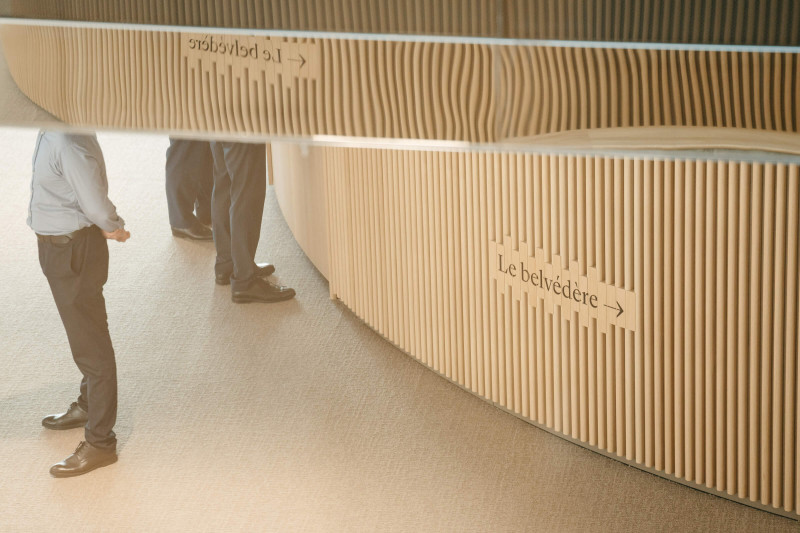
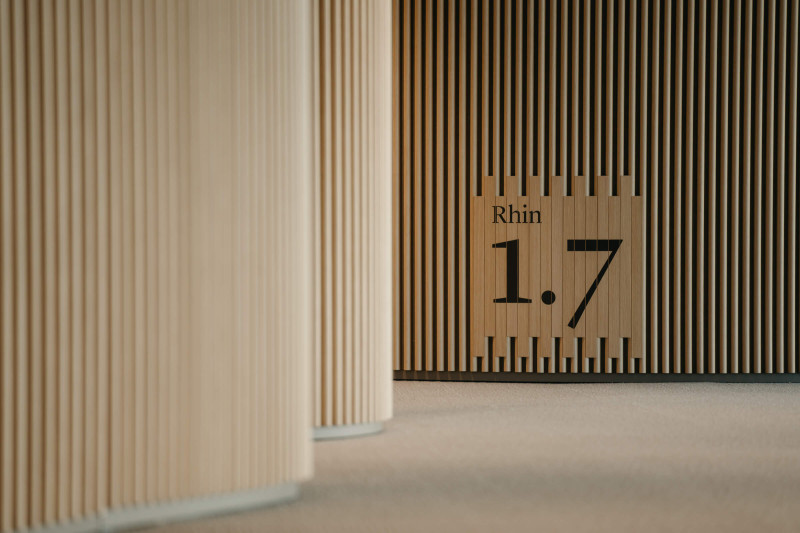
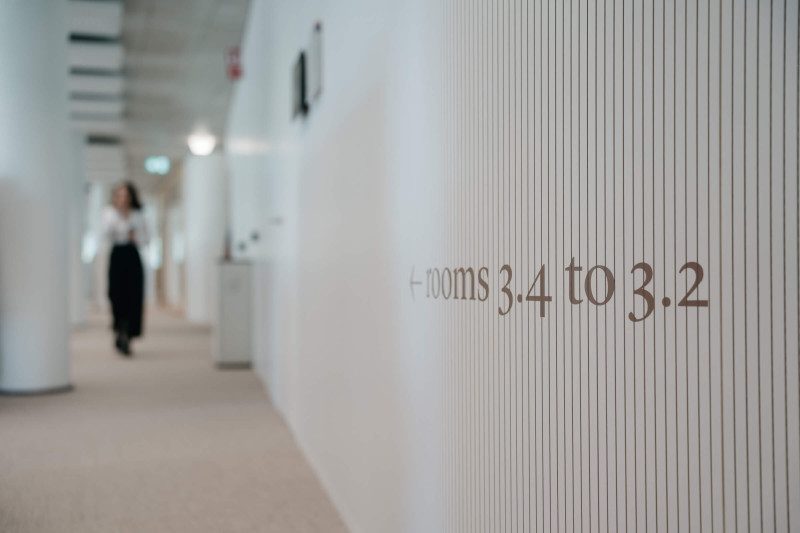
We will establish the intention to define the Franco-Arab relationship as the primary foundation of the project. In our visual language, this will be expressed through a linguistic and typographic relationship—the systematic presence of both languages treated with equal visual intensity while still cultivating cultural differences. This typographic approach, which highlights the relationship and equivalence in terms of importance, will constitute one of the syntaxes of our project. The second layer pertains to architecture—minimalist and horizontal, it contrasts with the vegetation and geology through its simple geometric construction: two horizontal lines supported by numerous slender pillars. It is typography that becomes architecture, abstractly representing the building’s horizontal and vertical lines. The third constant involves the site itself, with its geology, the surrounding mountains, and above all its vegetation. Using a mode of representation based on geometric illustrations, we will connect these different elements, forming an autonomous layer of the visual language. The typographic and vegetative layers will intertwine, interweave, and shift between the foreground and background depending on the message.
Design Team — Ruedi Baur et Benjamin Ribeau
Architecture — Lacaton & Vassal Typographic
Research — Huda Smitshuijzen AbiFarès
Illustration — Juliette Rey