2001
Georges Pompidou Center, Paris
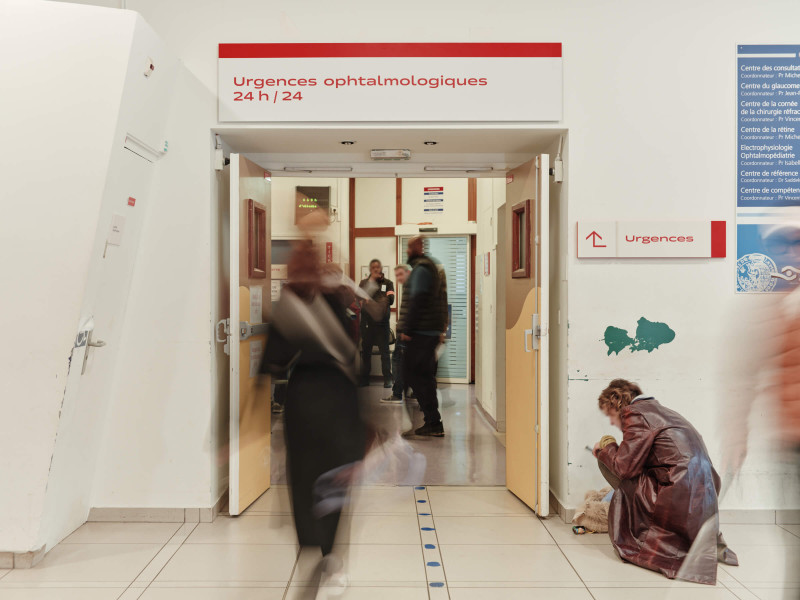
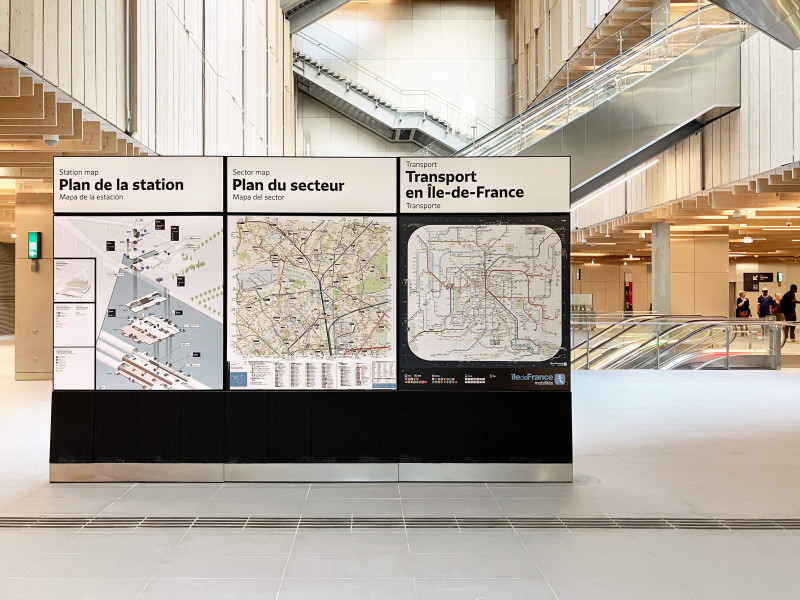
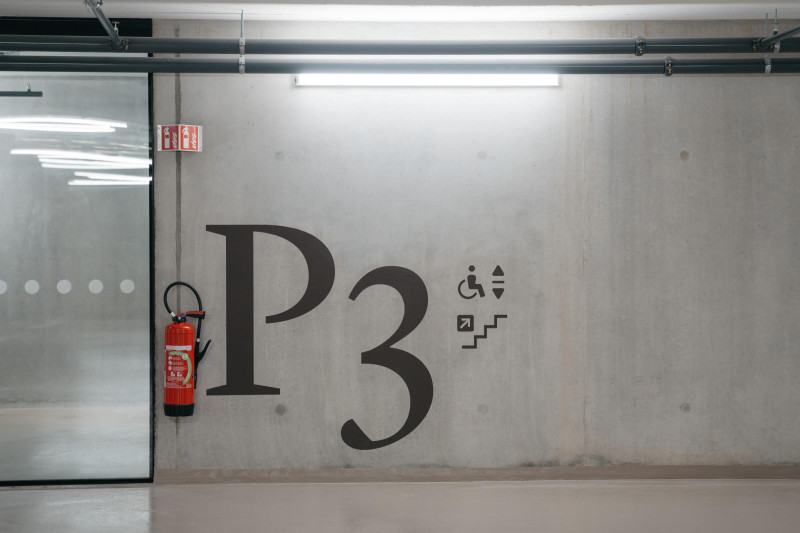
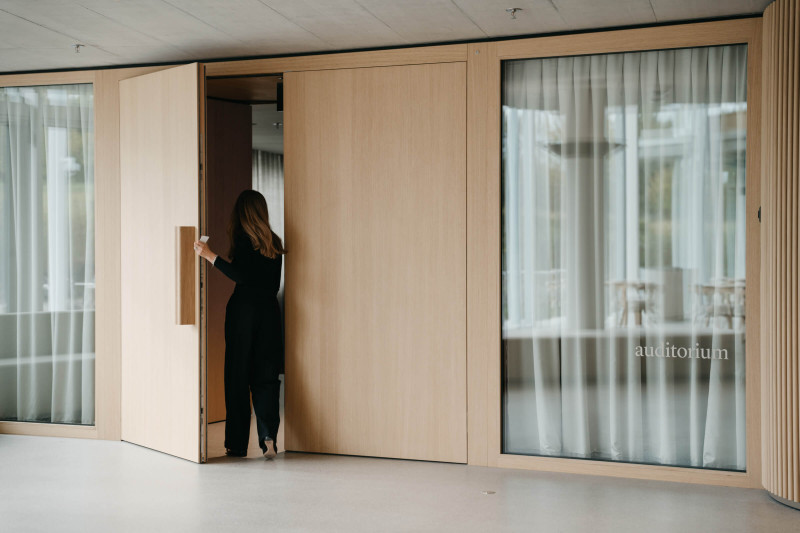
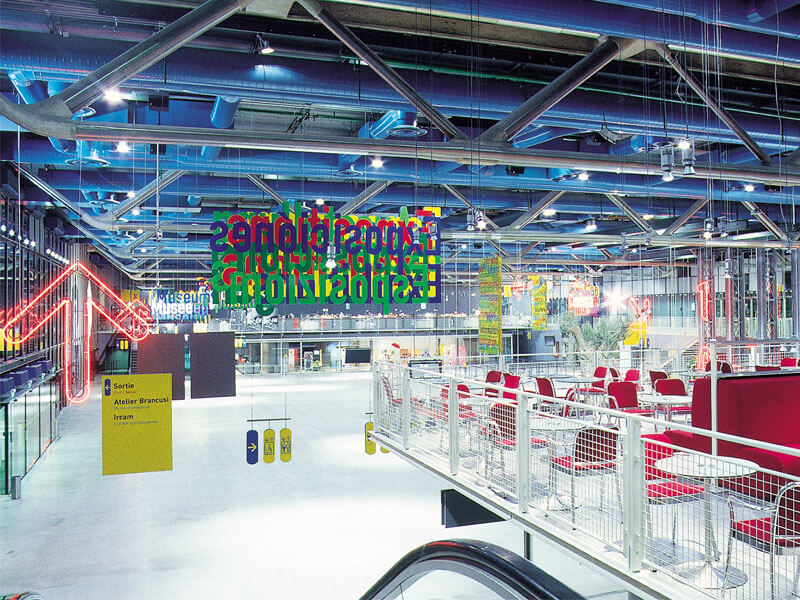
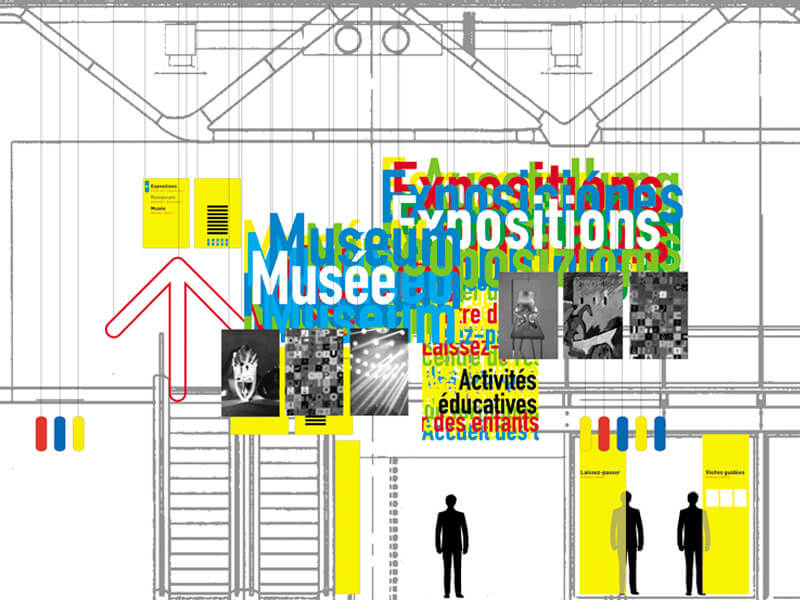
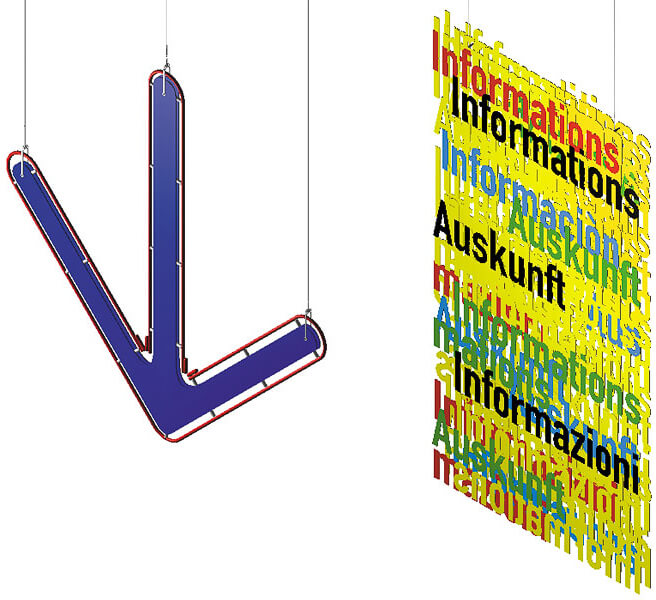
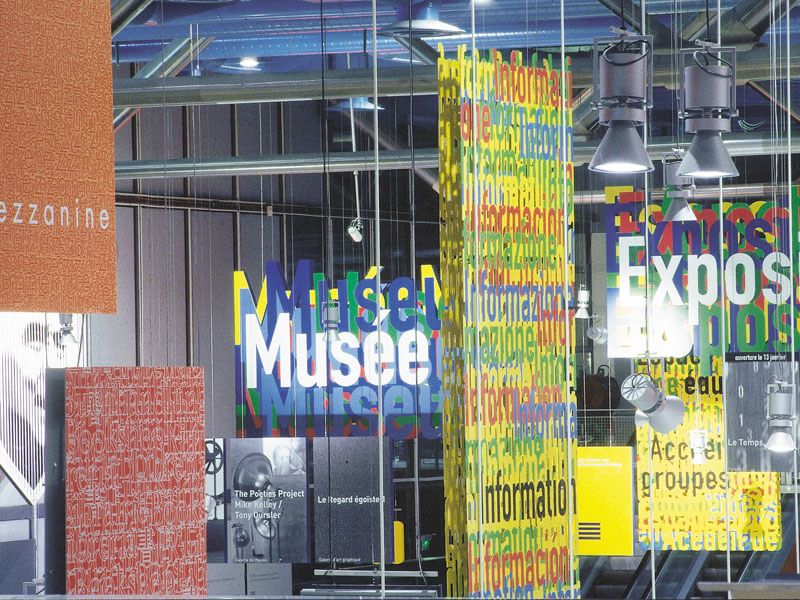
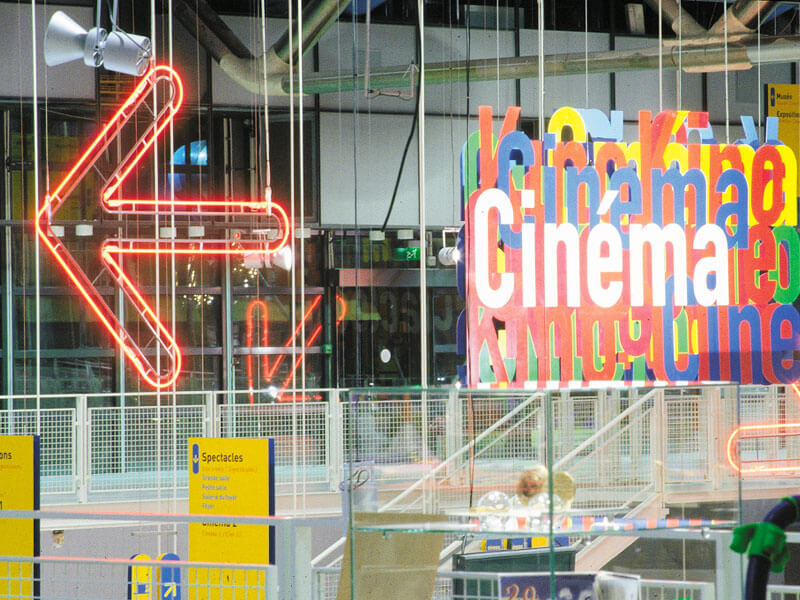
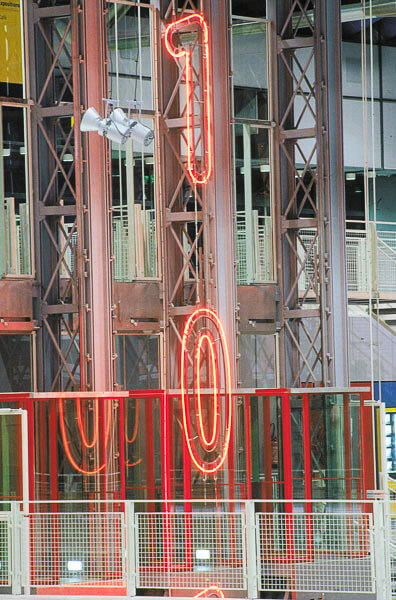
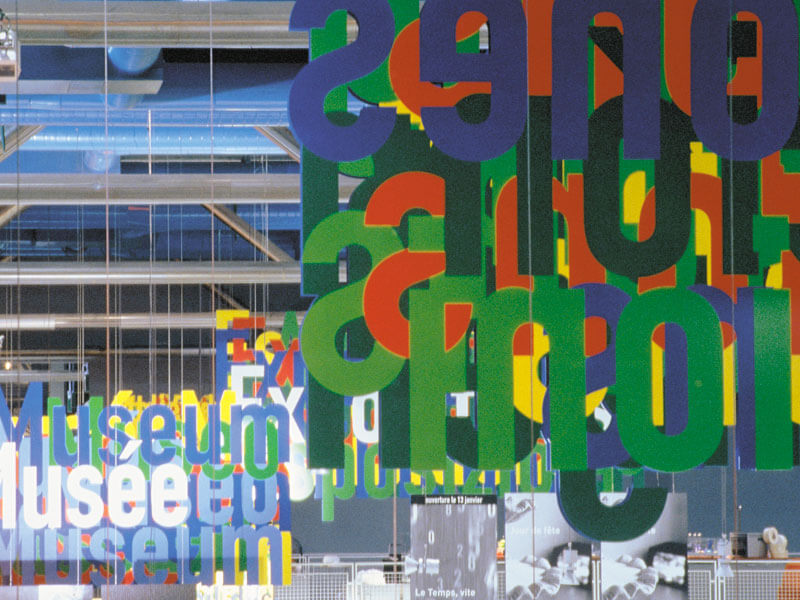
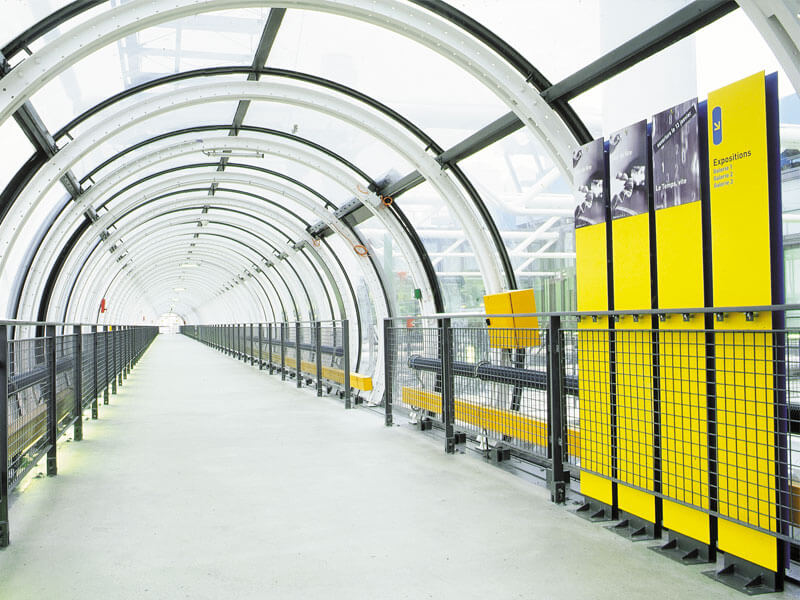
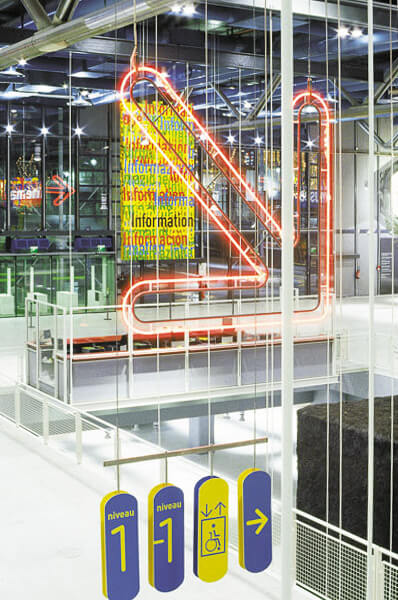
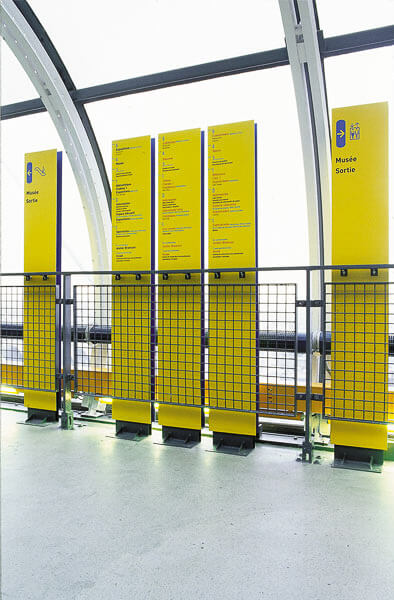
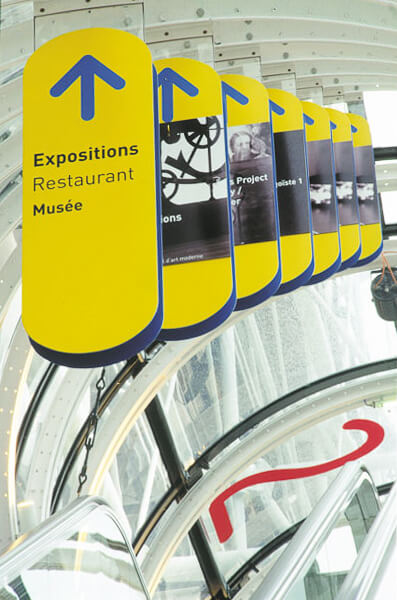
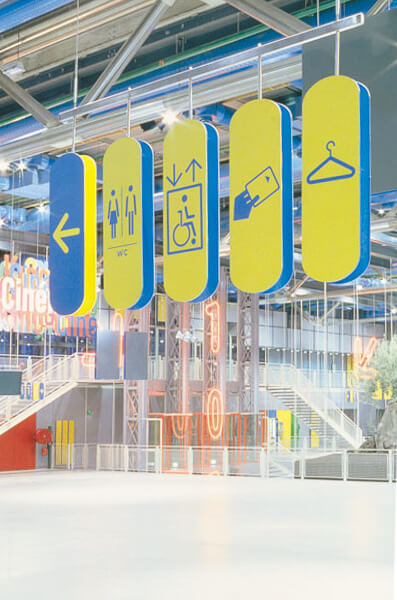
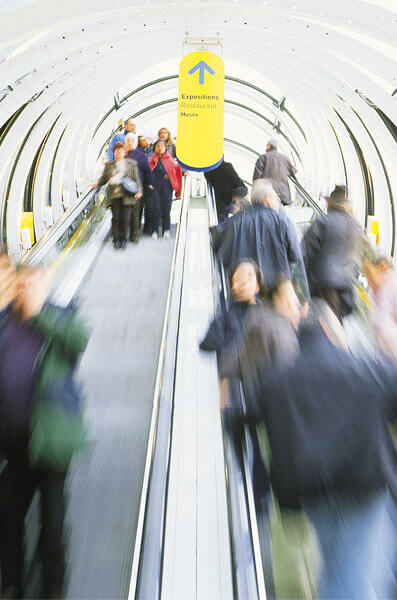
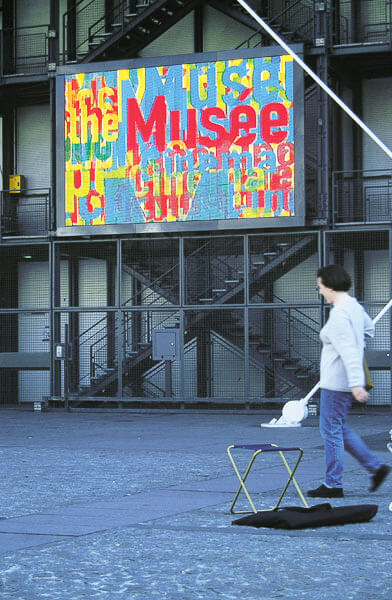
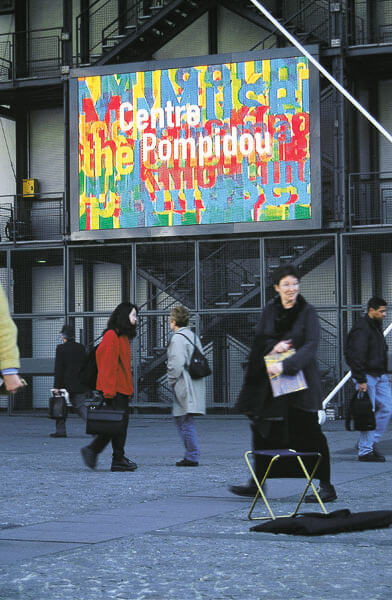
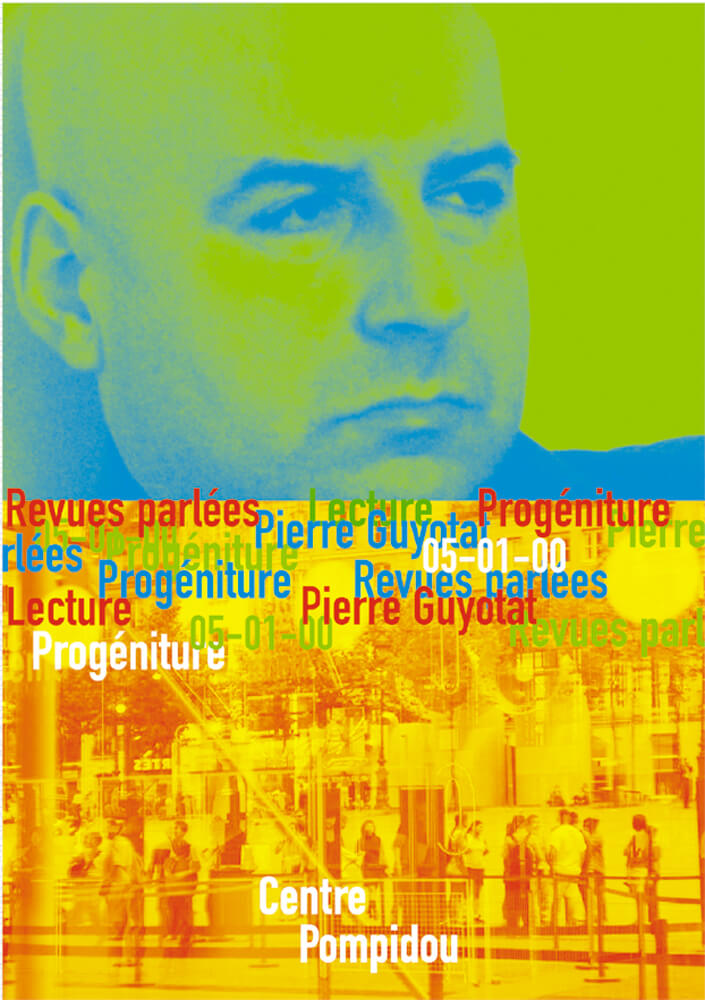
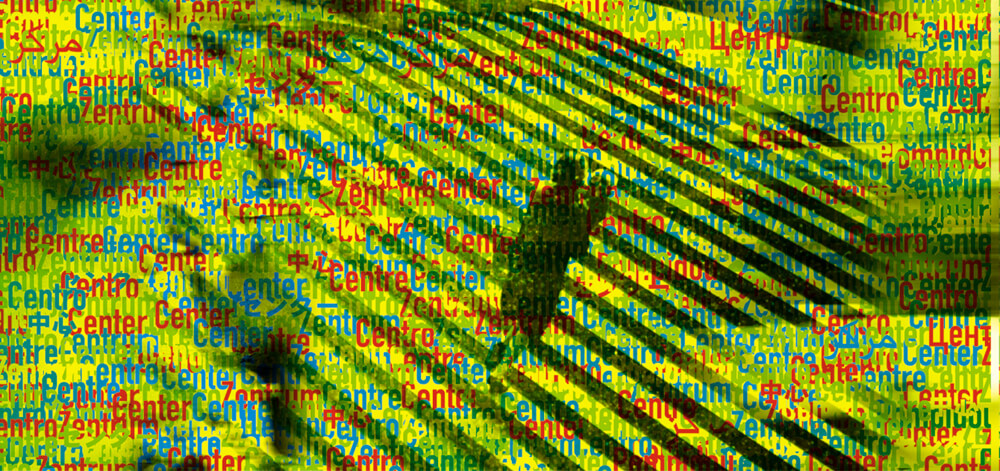
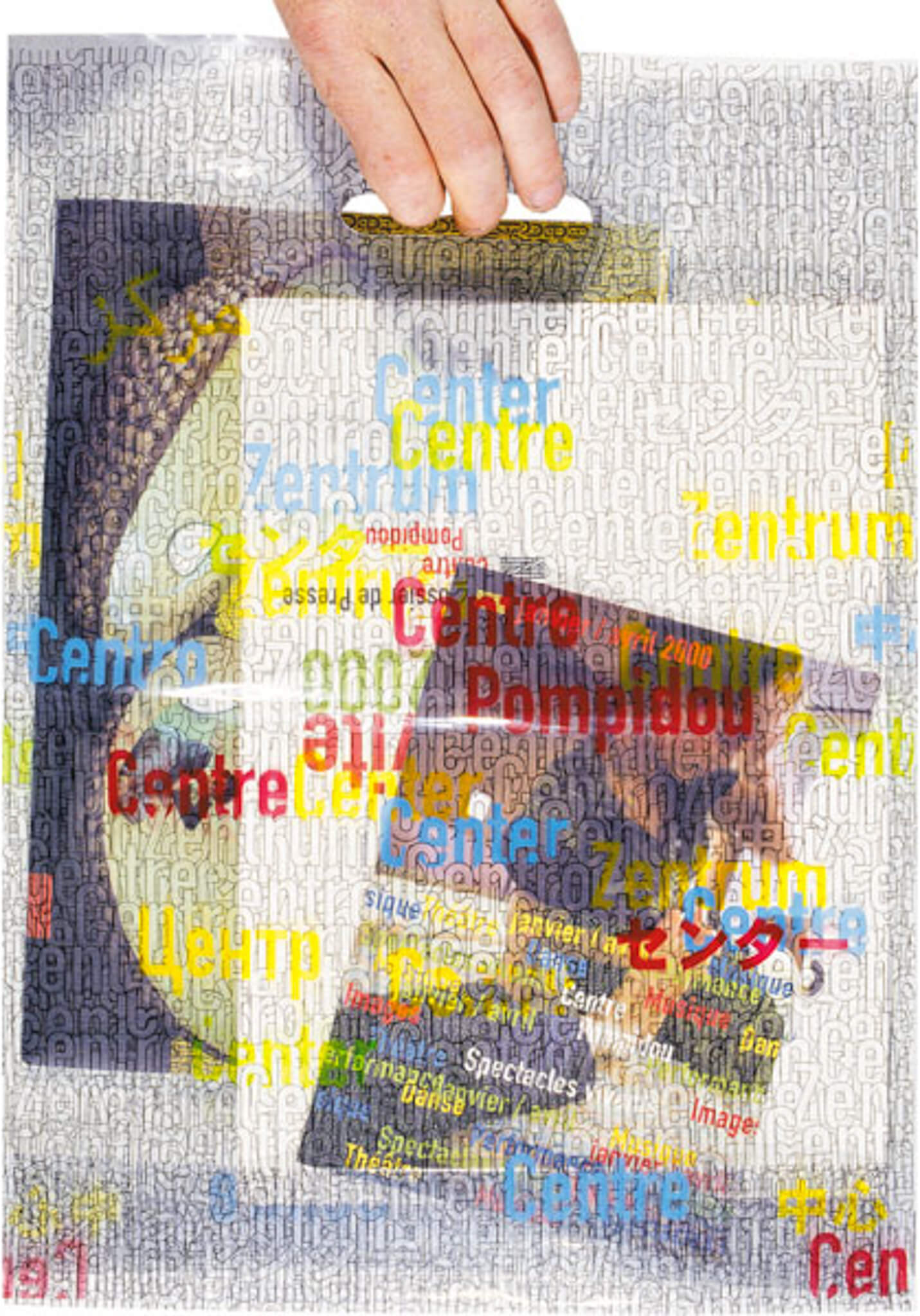
At the heart of this project lies a commitment to highlighting the international character of both the visitors and the artworks and artistic productions presented at this venue. After three years of closure for renovation, this building—one of the most visited in the world—needed to win back its audience and win them over once again. The institution also needed to demonstrate that it would remain a leading venue for presenting the most diverse contemporary artistic expressions, despite the turn of the century. The graphic proposal embraces this legacy. It was decided to retain the logo and the color palette associated with the building. The visual identity is developed based on several elements that can be adapted through various combinations: the “Centre Pompidou” typogram, the logo designed by Jean Widmer, a typeface, a color palette, and an identifying structure conceived as a fabric of text that can be treated as a watermark or with high visual intensity. The signage approach is based on the spatial fragmentation of the signage medium and on the desire to make visible not only the information conveyed by the signage but the “signage object” itself. The terms “museum,” “exhibitions,” “library,” “cinema,” and “performances,” translated into several languages, welcome visitors and give them an immediate sense of the Center’s activities. This information is complemented by large neon arrows and a series of displays listing temporary activities. While the signage does not hesitate to take center stage in the lobby, it fades into the background as one approaches the cultural activity spaces.
Design team — Ruedi Baur, Denis Coueignoux, Eva Kubinyi, Chantal Grossen, Félix Müller, Béatrice Selleron, Ludovic Vallognes, Claudia Wildermuth