
2021
Petite France parking lot, Strasbourg
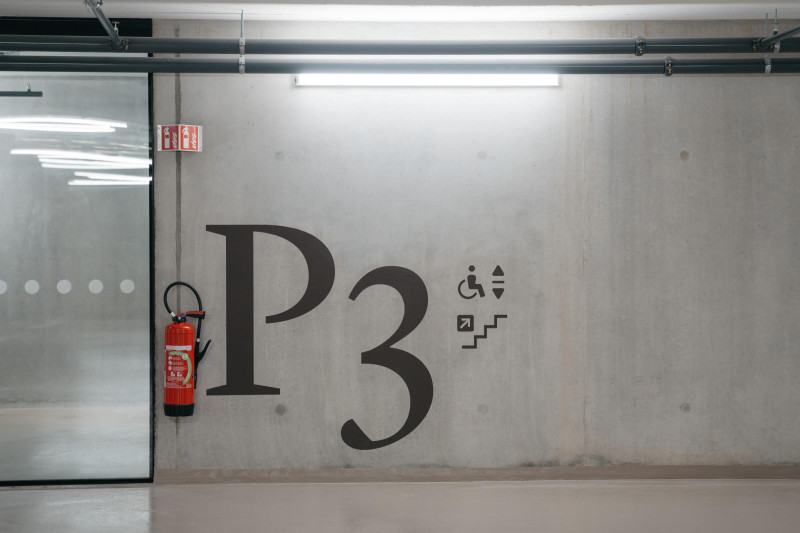
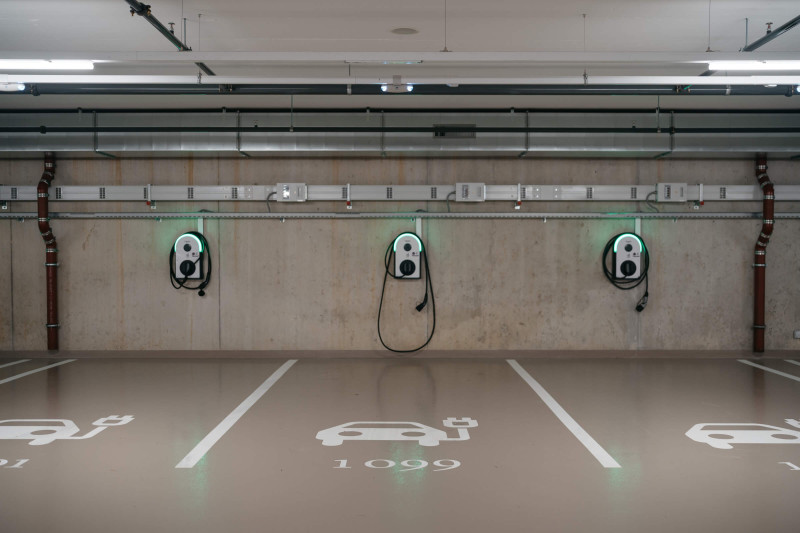
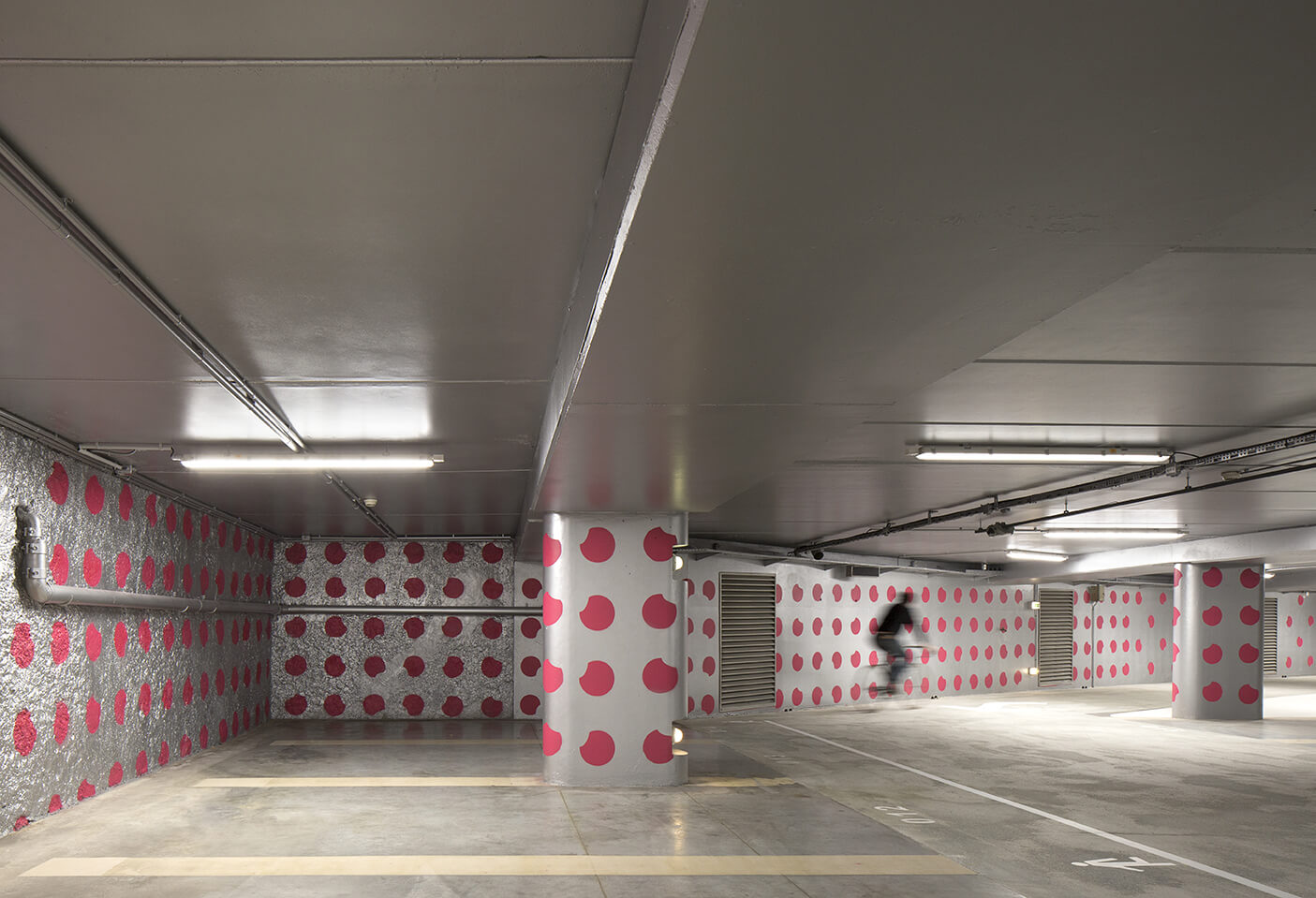
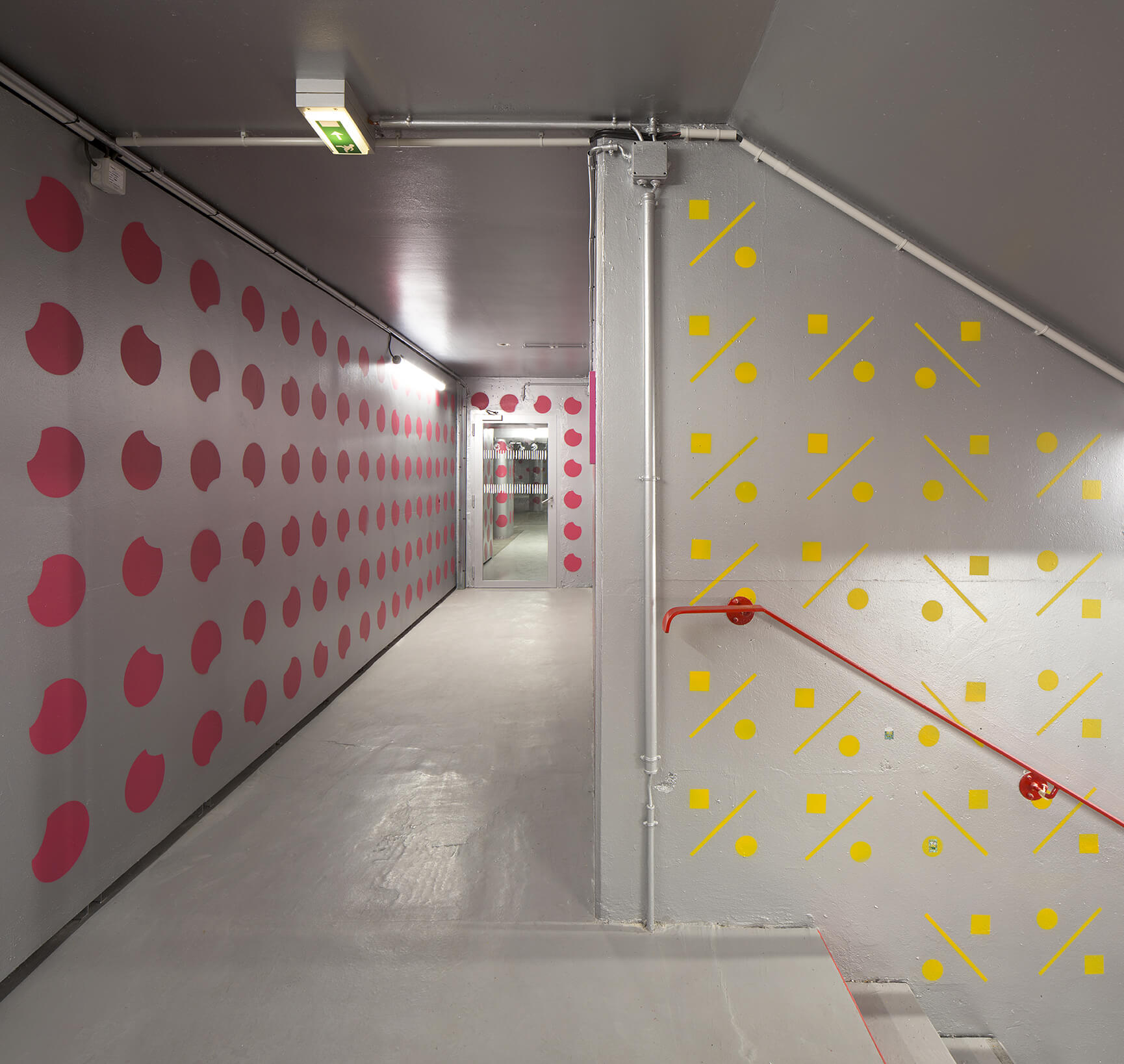
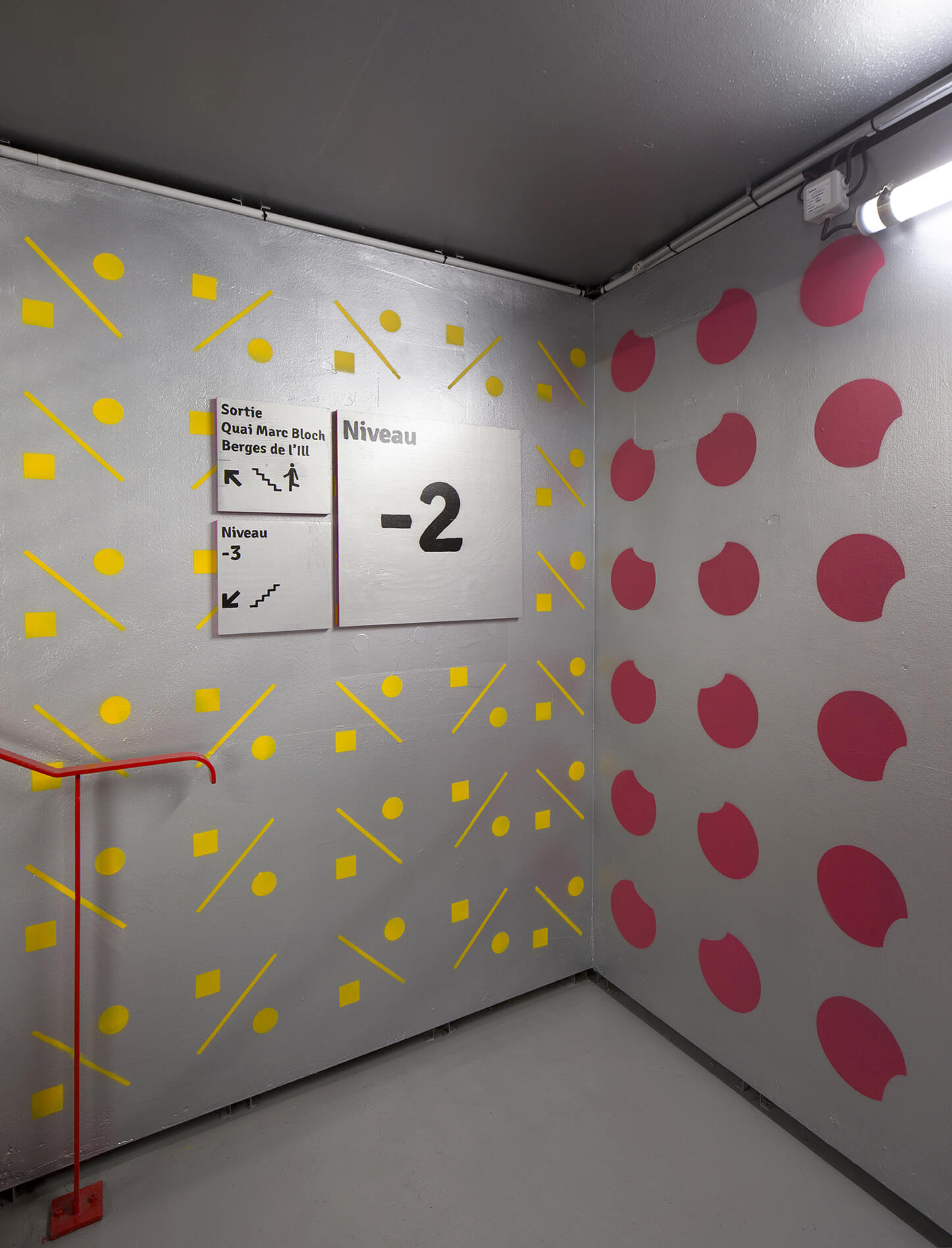
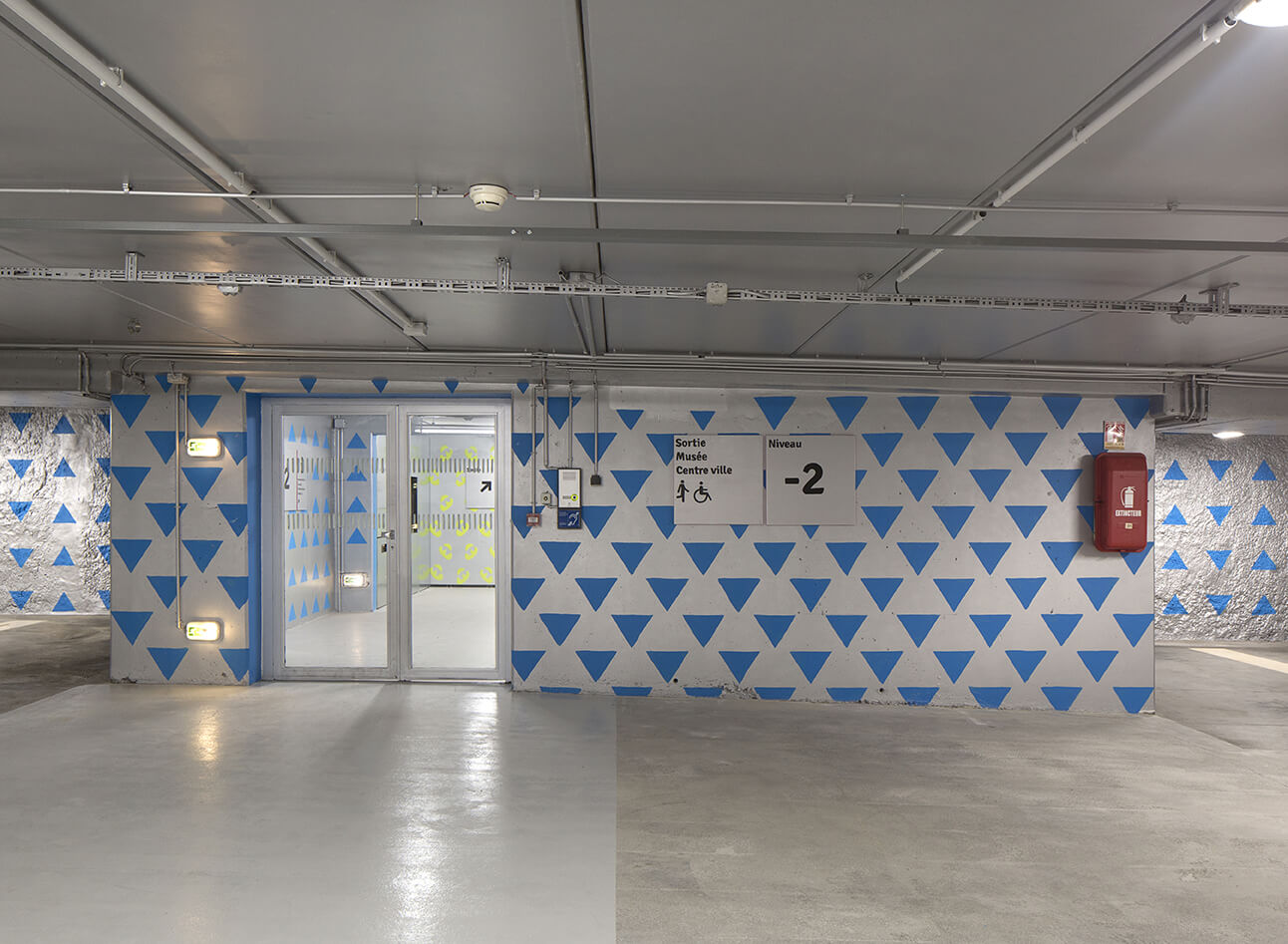
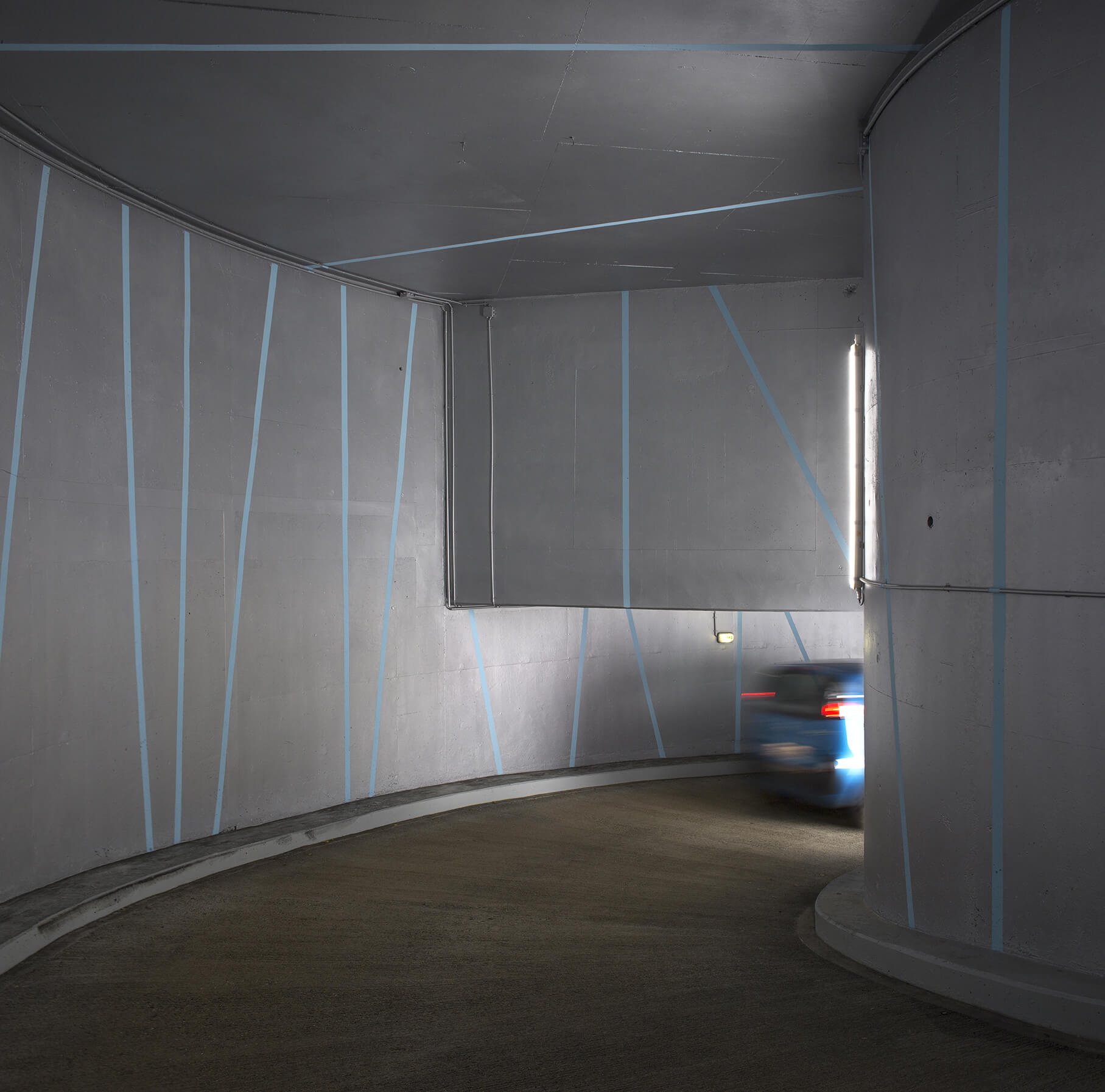
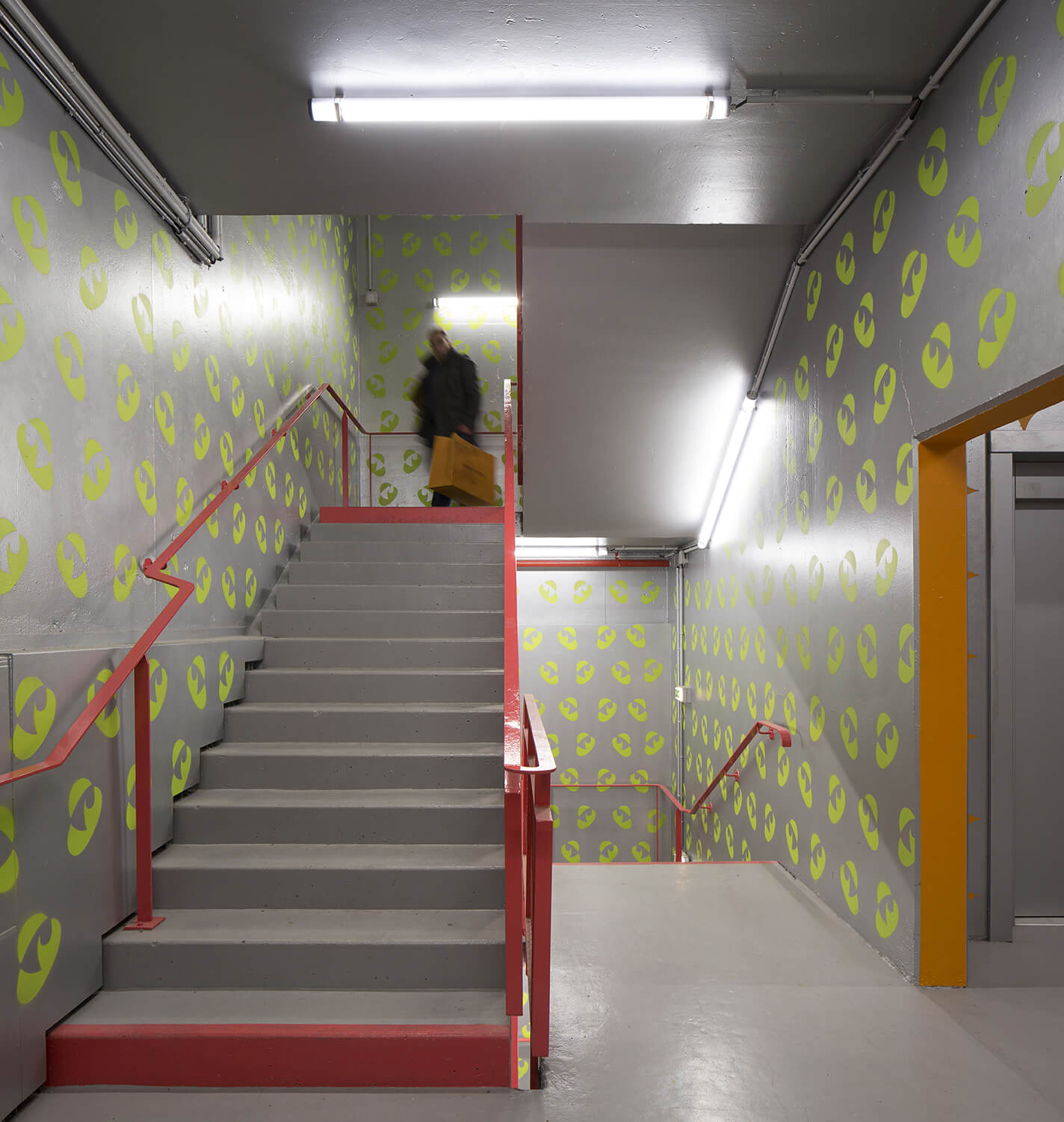
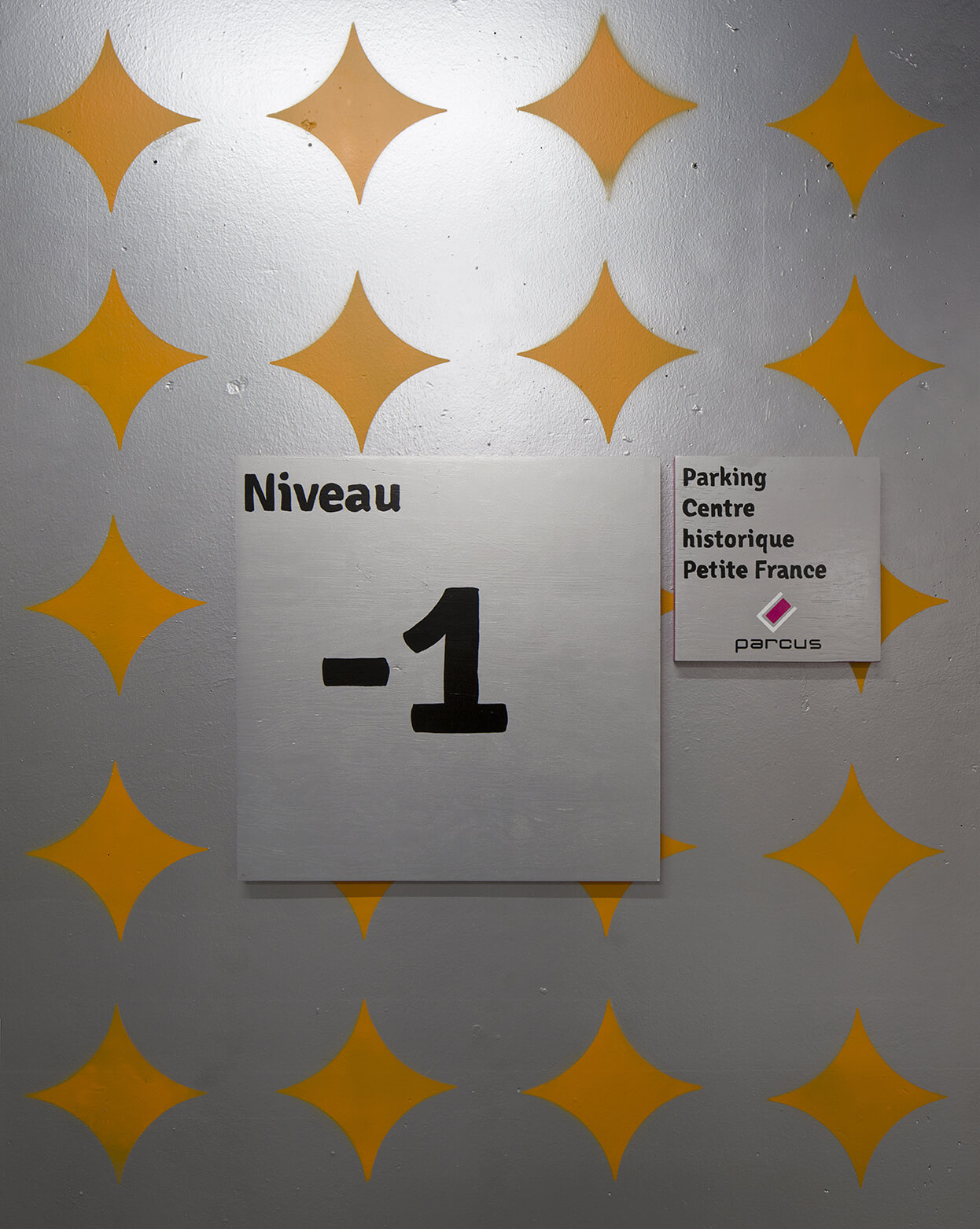
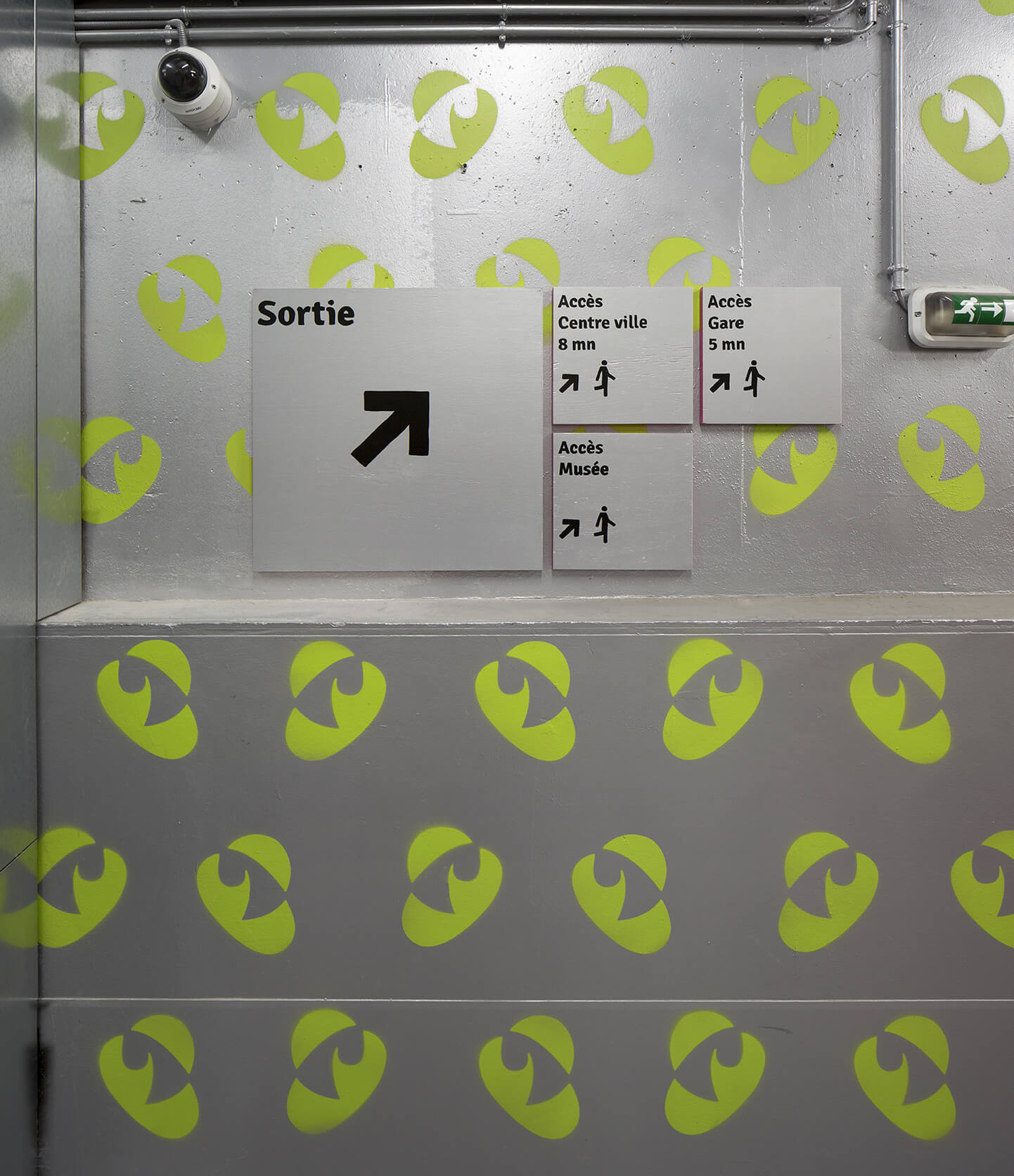
In keeping with the Parcus design guidelines, which rely on various shades of gray, our proposal involved applying markings on a single monochromatic background: silver gray. This relatively light color creates a uniform look across the entire site, which will help the markings and information stand out more clearly. In contrast to this overall, uniform monochrome background, the various spaces (entrances, vertical pedestrian circulation routes, parking areas, etc.) are each highly personalized and identified by the application of a repetitive marking specific to each of these spaces.
Much like wallpaper, which identifies each room in a house, a pattern was designed and applied using a stencil or directly with a brush, allowing users to orient themselves through a visual means that is richer and more evocative than a simple color code or alphanumeric system. As users move from one space to another, their visual experience evolves. The patterns can be concentrated (toward pedestrian walkways, for example), intermingled or juxtaposed (in the central area), be more or less expressive, baroque, or “modern,” or else more integrated into the architecture in the case of vehicular traffic, for example. The visual richness produced by this process thus allows the user to focus their attention on their imagination and on deciphering the patterns, which will thereby become a mnemonic device for locating their vehicle. The signage for each level will feature the patterns presented in these spaces. All pedestrian signage is designed according to the same principle as the level identification.
The signs are painted the same silver color as the walls and ceilings, and the information is applied by hand (using stencils or brushes).
Design Team — Laboratoire irb: Ruedi Baur, Denis Coueignoux, and Olivier Duzelier